
Where the Idea Really Began
I grew up in a small town where connection was built into daily life.
Every point of contact involved a conversation.
Yes, everybody knew everybody, so when you made a stop on your errand run, after you left, you would know that Kim’s kids went swimming yesterday, that Uncle Joe’s back had improved, and that their new car (which broke down, but shouldn’t have) had been repaired.
All relationships were anchored in conversation. Frequent. Friendly.
Trust was high. Connections were multifaceted (that’s a nice way of saying that many of us were related to each other if you go back far enough).
And it wasn’t just the connections of a small town.
I also had great connection role models. (Maybe this is why I took it all for granted.)
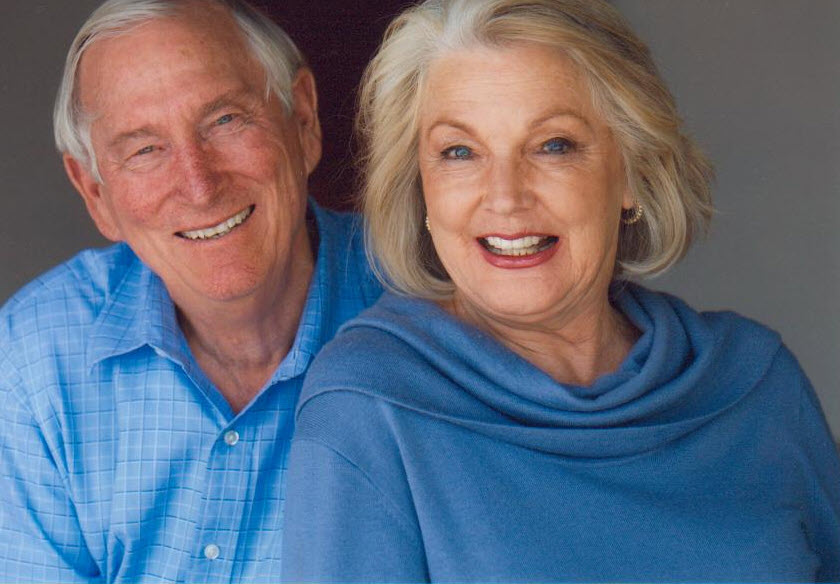
Mom was an extrovert. Dad was the introvert—the Rock, the great listener. It is a pairing that has worked for over 68 years.
I learned my social skills from Mom. She was a great storyteller, friendly and very verbal (that’s a nice way of saying she talks a lot). (Dad always said that if her mouth and feet stopped moving at the same time, she was asleep.)
Dad could just “be with you.” It was from his genuine interest and thoughtful questions that I learned the other side of great communication: listening.
I also grew up in a very large extended family, where family holidays were noisy, full of activity, and the tiers of every life stage were present—new babies, the venerated elders, and everything in between.
Once I left for college, I realized how rare all of this was.
For the next 15 years, I traveled an eight-hour round trip once a month to stay connected to my grandmother and keep her company.
I didn’t realize how much all this mattered until I left.

The Class That Changed Everything
When I went to a college of 30,000 people—three times the size of my hometown—I discovered something important:
Connection isn’t automatic.
It needs to be cultivated.
I enrolled in an interpersonal communication course as a freshman.
It was love at first class.
The room buzzed with energy—interactive exercises, role-plays, and real conversation.
People participated. They practiced real communication. And almost without realizing it, they became more confident, clearer, and more connected.
It was fun, interesting, and immediately useful.
And I learned something that quietly rewired how I saw the world:
Communication isn’t a personality trait. It’s a skill.
That one idea changed the trajectory of my life.
Best of all, I walked away with skills that I could apply in every area of my life and for the rest of my life. What a win.
I declared communication as my major and couldn’t get enough of learning how everyday interactions—listening, conversation, nonverbals, tone—shape people’s lives, relationships, confidence, and opportunities.
As fate would have it, the very instructor who taught that first communication class became my mentor and later my graduate advisor.
His classes were immensely popular, not just because they were fun—but because people experienced communication working.
People left with skills they used everywhere.
The classes were alive.
People loved them.
That experience set the direction of my life.
The Work of a Lifetime
After finishing two master’s degrees (one from Harvard), I spent years teaching communication across industries and institutions—businesses, schools, government agencies, executive education, and community organizations.
I’ve taught:
• executives and leadership teams
• graduate school, college, high school, and middle school students
• public-sector organizations
• community groups and nonprofits
I’ve helped people resolve conflict, rebuild trust, and communicate more clearly—including work as a mediator with organizations like the U.S. Postal Service, supported by mediation training through Harvard Law School.
Connection Anchor is the culmination of the best of many years of communication training done across many industries, many socioeconomic groups, many educational levels, and many cultures.
What I’ve seen again and again is simple:
When you change how someone communicates, you immediately change how securely their relationships are anchored.
I love this work because it makes a difference.
It changes lives.